
Common Failure Modes of Metal Hoses
In fluid conveyance, metal hose is typically used as a last resort option when other non-metallic hose types will not work for the intended application. Improper hose selection can lead to catastrophic failure and/or significant facility downtime. Even worse, any failures can lead to injury or even death.
September is Hose Safety Awareness Month, so we will review some common failure modes for flexible metal hose to assist industry professionals with proper hose selection, design, handling, and installation. Tips on how to avoid premature failures are also discussed.
Overbending
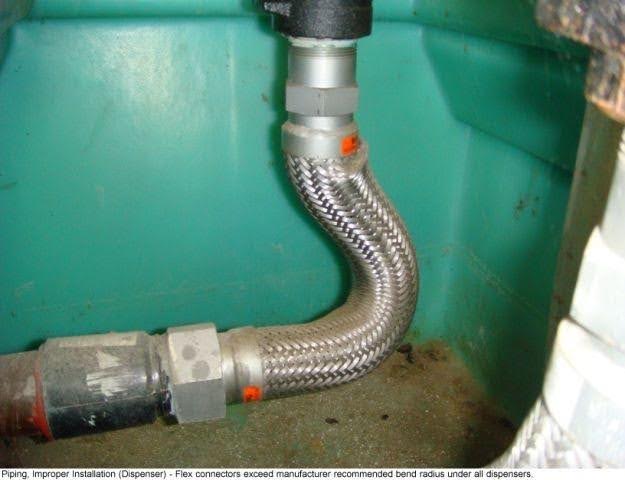
Every corrugated metal hose has a listed minimum bend radius (static and dynamic). While it may be difficult to determine the exact bend radius a hose will be subjected to, there are measures that can be taken to prevent overbending. For example, avoiding bending the hose directly behind the end fitting is a necessary precaution to avoid an overbending failure.
Bend restrictors are a great option for many applications where a metal hose may be bent tightly (especially if done close to the end fittings). These are interlocked hoses that are external to the corrugated hose and prevent it from overbending.
Corrosion
Corrosion is a failure mode that depends entirely on the internal and external media that the hose comes into contact with. It’s critical to verify media compatibility during the hose selection process to prevent this.
Corrosion charts/chemical resistance charts are a resource commonly used to determine media compatibility. Metal hoses are offered in various alloys (including 304, 316, and 321) because certain alloys are ideal for certain media/applications.
There are various types of corrosion that can occur on a metal hose (pitting, stress, galvanic, etc.), and failure analysis can help pinpoint what caused corrosion on a metal hose.
Torque
Torque is a rotational force that is applied to a metal hose that can result in twisting deformations of the hose.
Torsion often happens even when the hose isn’t actively in service. It can happen when the hose is being stored, transported, inspected, etc. It frequently occurs during the installation of the hose. If only one wrench is used when tightening end fittings on a hose, it is vulnerable to torsional stress. Care should be taken when installing corrugated hoses to avoid any torsional stress during installation and operation.
Overpressurization
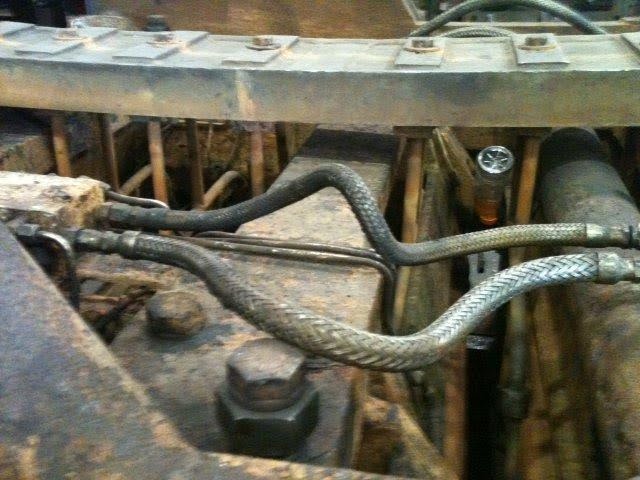
Overpressurization is a failure mode that can easily be prevented during the hose selection process. Firstly, it is imperative to understand the application and know the operating pressure the hose will be subject to when in service as well as whether it will undergo pressure spikes/fluctuations. In most applications, the catalog maximum allowable working pressure should be used to select the hose. However, dynamics such as pressure spikes or high-temperature service can require maximum allowable working pressure to be derated to accommodate these application variables.
Vibration
Extreme vibrations can result in hose failure, especially because metal hoses are not meant to accommodate axial movements that can be present in vibrating systems. On the other hand, expansion joints can be designed to accommodate these movements along with angular and lateral movements and are often a solution in applications with extreme vibration.
Every hose failure mode mentioned here can be catastrophic and costly. To avoid these potential failures, there is a recommended method that the industry follows called S.T.A.M.P.E.D. (size, temperature, application, media, pressure, end fittings, dynamics). This ensures you select the correct hose for the specific challenges of any given application.
Safety is a priority at Hose Master, and we take the necessary steps to ensure our employees and customers are kept out of harm’s way starting from hose selection all the way to installation. Follow along with us as we continue to share tips to prioritize hose safety throughout Hose Safety Awareness Month.
-
When to Use Flexible Metal Products
-
Select the Right Hose for Your Application
-
Select the Right Corrugated Metal Hose
-
Select the Right Stripwound Metal Hose